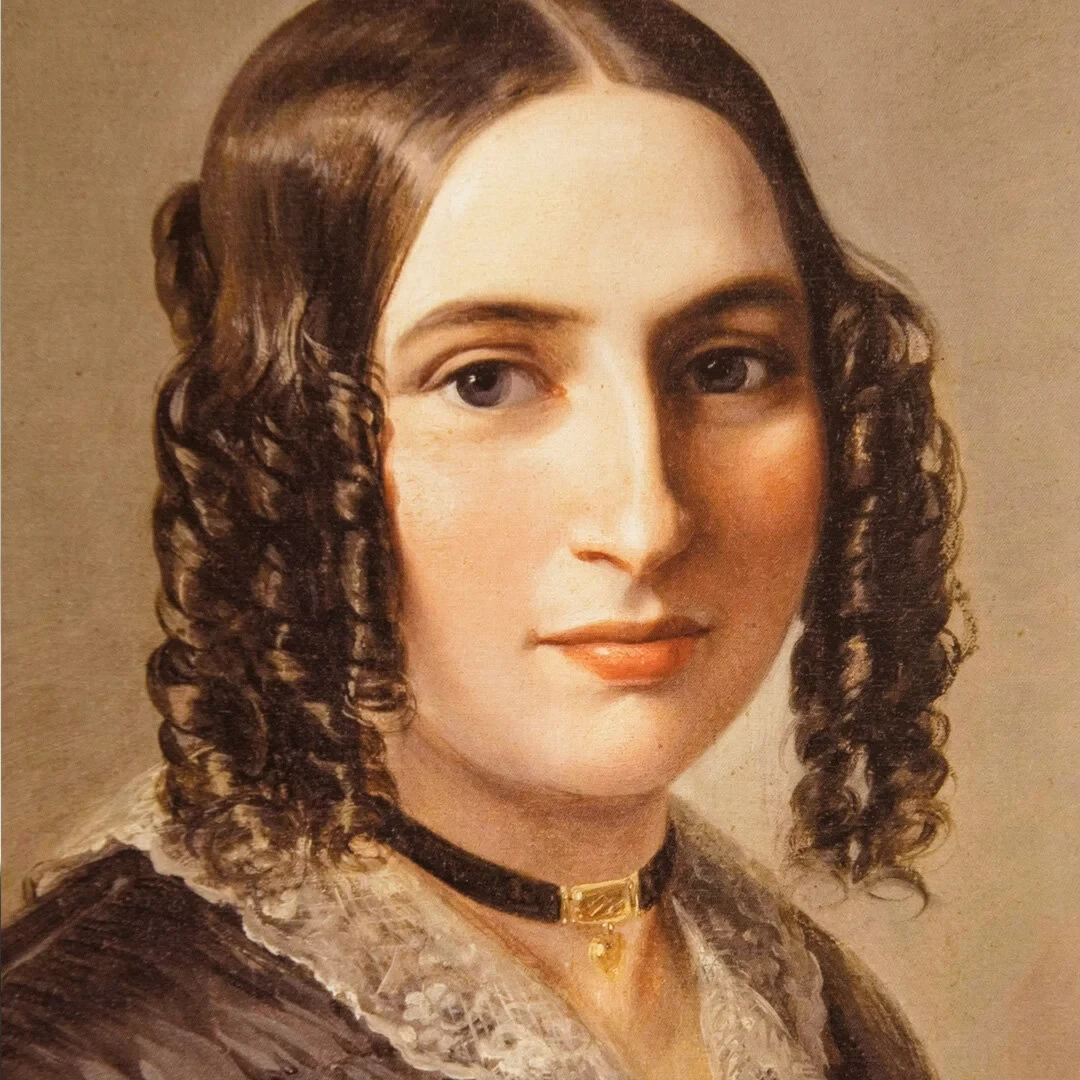
Fanny and her younger brother Felix were inseparable musical prodigies since childhood. They studied under the same teachers, memorized Bach side by side, critiqued each other’s compositions, and shared a creative language no one else understood.
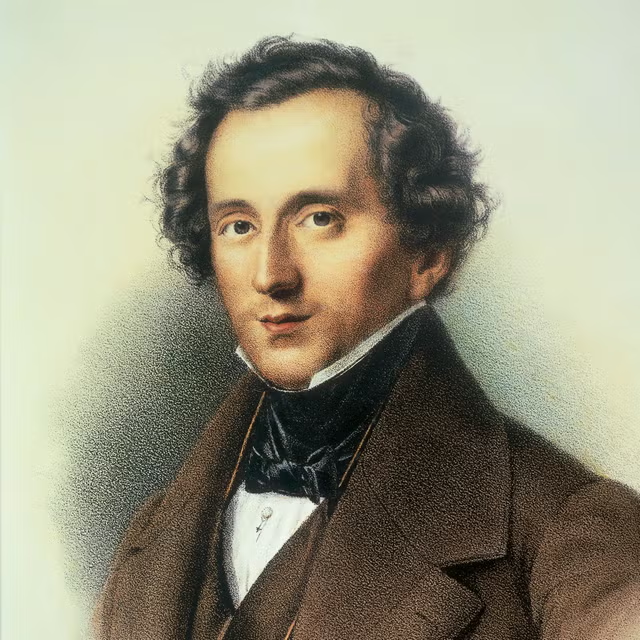
Felix often admitted Fanny was the better pianist.
But their futures were never equal.
She wrote over 460 pieces of music — but the world knew them under her brother’s name. Fanny Mendelssohn was one of the greatest composers of the 19th century.
But she was born in 1805 — and born female — and that single fact kept her brilliance hidden for more than a century.
When Fanny was a teenager, her father wrote her the letter that defined her life:
music could be Felix’s calling — but for her it must remain only an “ornament.”
A pastime.
A pretty skill for a wife and motherNever a profession.
Still, the music poured out of her. Over 460 compositions: piano pieces, songs, chamber works, cantatas.
But publishing? Performing? Stepping into the world as a composer?
Unthinkable for a woman of her class. The compromise was devastating:
Unthinkable for a woman of her class. The compromise was devastating:

Felix published some of her most beautiful songs under his name.
He performed them and they became famous. And the world believed they were his.
He performed them and they became famous. And the world believed they were his.
The most surreal moment came in 1842, when Queen Victoria excitedly told Felix her favorite of his songs — “Italien.” She sang it for him. Felix had to confess: “Your Majesty… my sister wrote that.” And still, nothing changed.
Denied the public stage, Fanny created her own world.
She hosted legendary musical salons in Berlin, conducting her works and performing for the city’s most brilliant minds.
She hosted legendary musical salons in Berlin, conducting her works and performing for the city’s most brilliant minds.
Inside those walls, she was a genius.
Outside them, she was invisible.
At 41, she finally did the unthinkable: she published music under her own name. Critics praised her immediately. Publishers wanted more. For the first time, the world began to see her for who she was.
One year later, while rehearsing at the piano, she suffered a stroke and died.
She never lived to see her music recognized, studied, and performed around the world. For 150 years, her genius was nearly erased. Today, musicians call her works masterpieces — pieces of the Romantic era that should never have been hidden.
She deserved to be a legend.
But, now, at last, she is becoming one.
But, now, at last, she is becoming one.
Fun Fact :
Fanny’s long-lost “Easter Sonata,” once assumed to be Felix’s, was proven in 2010 to be hers — instantly recognized as one of the greatest piano works of the era.
Her story forces hard questions :
How much brilliance has the world lost because it came from the “wrong” person?
And how many names, like Fanny’s, were buried by prejudice instead of preserved by history?
@ Yeshwant Marathe
yeshwant.marathe@gmail.com
Sources: Smithsonian Magazine, BBC Culture